Mohnen Angus • February 10, 2017
3
CED BW WW YW DOC MILK CW MB REA
52
69
10
5
23
87
6
81
41
Birth Date: 1-12-2016
Bull 18545410
Tattoo: 1006
CED BW WW YW SC MILK CW MARB REA
+3.4
+5
+75
+128 +1.32
+61
+.36
+.53
+26
DAM BR
DAM WR
DAM YR
5-105
5-105
3-104
$W $B ACT. BW ADJ. 205 ADJ. 365 ADJ. SC ADJ. IMF ADJ. REA
+71.61 +146.83 99
901
N/A N/A
1
SAV Harvestor 0338
#SAV Heritage 6295
Mohnen Global 1274
+SAV Emblynette 7749
+17848388 #+Mohnen Jilt 1655
#+Wulffs Ext 6106
#Mohnen Jilt 910
Mohnen Global 1006
#+Mohnen Dynamite 1356
#Baldridge Kaboom K243 KCF
Mohnen Zara 510
#Mohnen Jilt 910
16875455 #+Mohnen Zara 2057
#+Rito 1I2 of 2536 Rito 6I6
Mohnen Zara 15
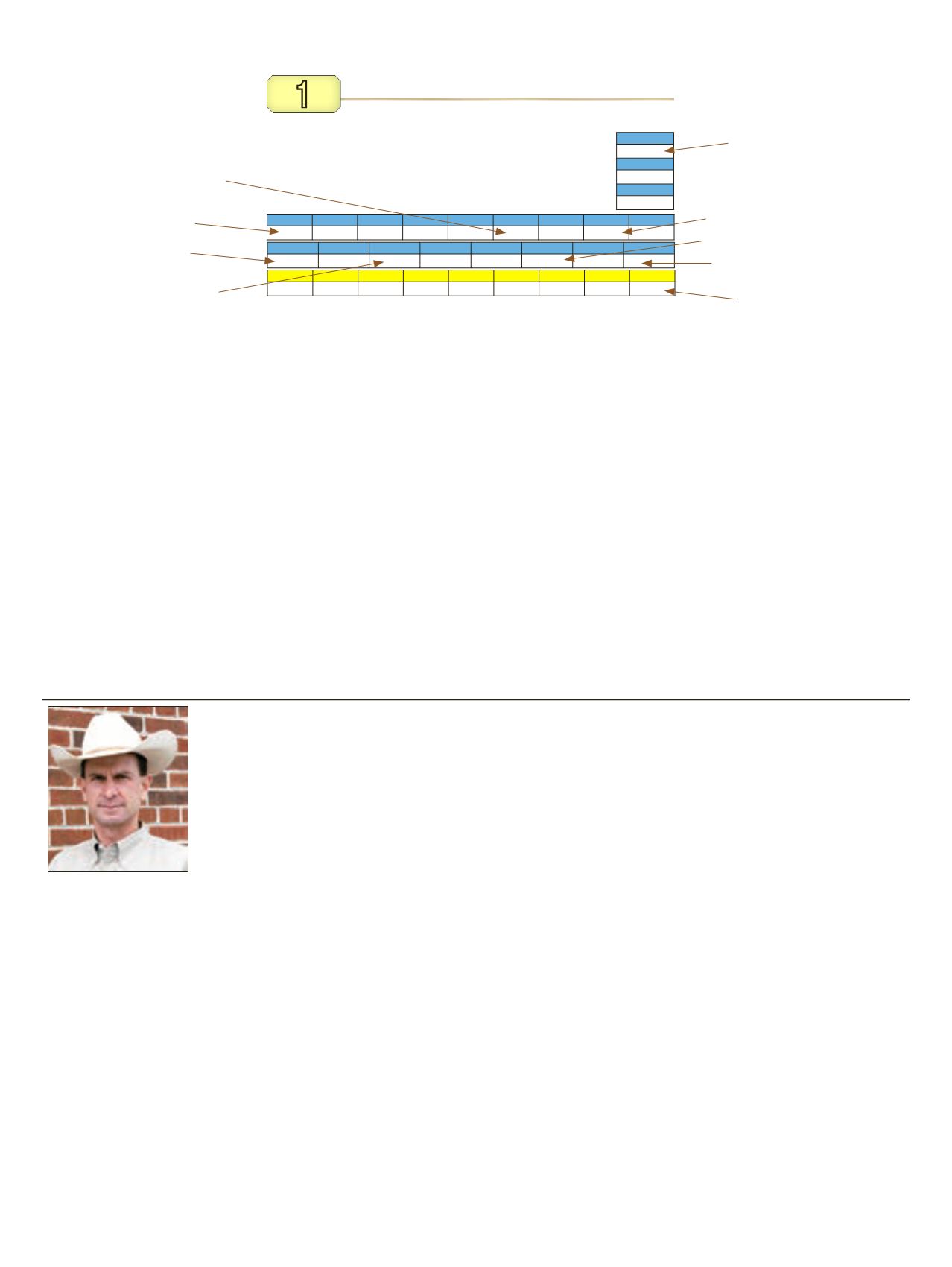
HOW TO READ
READING THE DATA
Growth EPDs
$Values
Weights
Maternal EPDs
Carcass EPDs
Dam’s Production
Scrotal Measurement
Adjusted Ultrasound
DNA
GROWTH, CARCASS AND MATERNAL EPDS
Calving Ease Direct (CED)
is expressed as a difference in
percentage of unassisted births, with a higher value indicating
greater calving ease in first calf heifers.
Birth Weight EPD (BEPD)
is expressed in pounds, is a predictor
of a sire’s ability to transmit birth weight to his progeny com-
pared to other sires.
Weaning Weight EPD (WEPD)
is expressed in pounds, is a
predictor of a sire’s ability to transmit weaning growth to his
progeny compared to that of other sires.
Yearling Weight EPD (YEPD)
is expressed in pounds, is a
predictor of a sire’s ability to transmit yearling growth to his
progeny compared to that of other sires.
Scrotal Circumference EPD (SCR)
is expressed in centimeters,
is a predictor of the difference in transmitting ability for scrotal
size compared to other sires.
Maternal Milk EPD (Milk)
is a predictor of a sire’s genetic merit
for milk and mothering ability.
Carcass Weight EPD (CW)
expressed in pounds is a predictor of
the differences in hot carcass weight of a sire’s progeny com-
pared to that of other sires.
Marbling EPD (Marb)
expressed as a fraction of the difference
in USDA marbling score of a sire’s progeny as compared to
progeny of other sires.
Ribeye Area EPD (RE)
expressed in square inches, is a predictor
of the difference in ribeye area of a sire’s progeny as compared
to progeny of other sires.
$VALUE INDEXES
$Value indexes
, are multi-trait selection indexes to assist beef
producers by adding simplicity to genetic selection decisions.
$Values are reported in dollars per head, where a higher value
is more favorable. Depending on your production scenario, you
can utilize individual indexes, or as we do at Bradley 3 Ranch, a
combination of $Value indexes. (Example: a cattleman in harsh-
er environments who retains females for replacements and sells
calves at weaning might utilize $EN + $W).
Weaned Calf Value ($W)
includes both revenue and cost ad-
justments associated with differences in birth weight, weaning
direct growth, maternal milk and mature cow size.
Beef Value ($B)
is the expected average difference in future
progeny performance for postweaning and carcass value com-
pared to progeny of other sires.
One of the most common concerns I hear from commercial
producers using Angus genetics is the size of calves at birth.
Instinctively, my first thought is that the producers experi-
enced calving problems due to the calves being too large at
birth. However, the problem generally tends to be just the op-
posite, where the calves have been extremely small and light
at birth, struggled to nurse and never caught up with their
contemporaries from a growth standpoint.
Upon visiting with the producer and reviewing the bull’s reg-
istration certificate and EPD profile, I usually discover a com-
mon theme – the producer had been selecting primarily for
calving-ease, low-birth-weight-EPD bulls with no regard to
any other traits. This is certainly understandable if the pro-
ducer is breeding heifers and needs a certain level of calving
ease delivered by low-birth-weight Angus bulls. Furthermore,
in the southeast, like many other areas of the country where
cow herds are relatively small, the herd bull may have to be
multipurpose, breeding both heifers and mature cows with,
again, emphasis being placed on calving ease.
At the risk of being controversial, many of these small calf
scenarios could be eliminated if the producers would sim-
ply be willing to accept more birth weight, particularly when
breeding mature cows. One only has to attend a production
or test station sale to witness firsthand how the heavier- birth-
weight-EPD bulls are penalized and therefore sell at a sub-
stantial discount. Have calving-ease and low-birth-weight
EPDs been overemphasized to commercial producers? May-
be; maybe not.
Regardless, the commercial producer equates Angus genet-
ics with calving ease, fertility, maternal strength and carcass
quality, and as seedstock producers we are challenged daily
to deliver those genetics.
In closing, producers need to select bulls that allow them to
reach their production goals; however, single-trait selection
based upon an individual’s birth weight EPD may needlessly
sacrifice additional pounds at weaning. Next time you are in
the market for a bull, don’t discriminate against a little more
birth weight EPD. You will still receive the calving ease you
have always expected from Angus and a few extra dollars in
your pocket at weaning!
Association Perspective
Low-birth-weight EPDs
Looking at a single trait on EPDs costs performance and money.
by
David Gazda
,
regional manager, American Angus Association


